

How to Improve Your English from B1 to B2 for Career and Study Success
Understanding the Leap from B1 to B2 in English Proficiency
When learners ask why jumping from B1 to B2 can feel so tough, I’m always honest: it’s not just about adding more words or reading longer articles. It’s a real change in how you use English - suddenly, you need to explain your thinking, solve problems, and truly connect with people. At B1, handling daily situations and simple work or study stuff is totally normal. But at B2? That’s when you need to argue your point, pick up on implied meanings, or tweak your language depending on who you’re talking to. Let me walk you through some of the biggest differences you’ll notice as you climb up towards B2:- Range: At B2, you’re using a much wider mix of grammar and vocabulary. It’s time to move past those memorised expressions and easy tenses so you can give opinions, compare ideas, and guess about things.
- Accuracy: You’ll still make mistakes, but at B2 they’re less frequent, especially on familiar topics. Other people shouldn’t have to guess what you mean - they should just get it.
- Fluency: Sure, you’ll pause sometimes, that’s normal. But at B2 you can keep going without those big, awkward silences.
- Complexity: You need to link your ideas together, use longer sentences, and show you can talk about more than just your everyday life.
- Independence: B2 users can deal with most situations on their own, even if the topic is a bit unfamiliar.
- B1: “I like my job because it’s interesting. I talk to customers and help them.”
- B2: “Although my job can be challenging at times, I enjoy the opportunity to interact with a variety of customers and solve unexpected problems.”
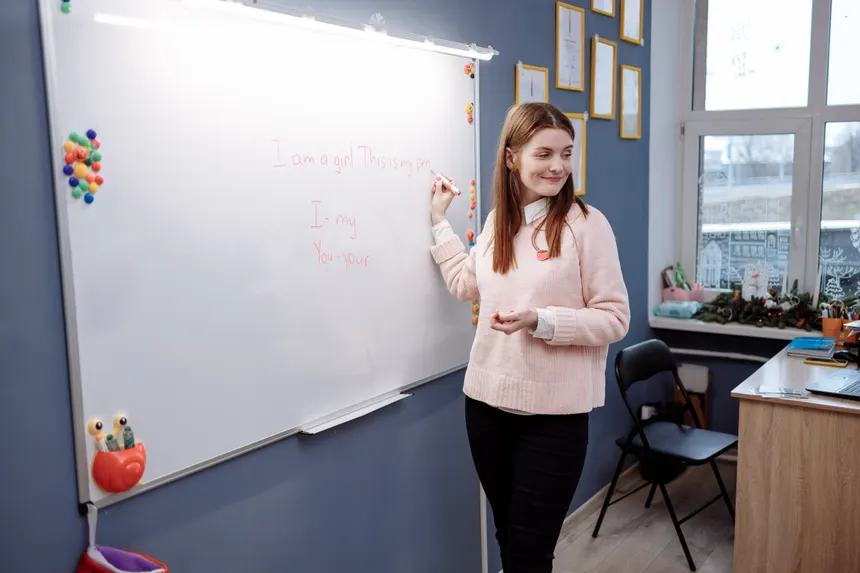
Essential Language Skills to Focus On When Moving Up a CEFR Level
So, what should you actually be working on if you want to move from B1 to B2? It’s more than just picking up new words or streaming endless TV shows (though both help, honestly). The trick is to hit all four skills - reading, writing, listening, and speaking - and use the right approach for each one. I’ve seen loads of learners get stuck because they only practise one skill, maybe just speaking, and forget the rest. But the CEFR level isn’t just about chatting to people - it’s about being able to use English flexibly, wherever you need it.- Reading: At B2, you’ll need to handle longer texts, like news articles, reports, or emails. Practise reading for the main idea and for the details. Try summarising out loud, or look for the writer’s attitude, not just the facts.
- Writing: You’ll be expected to write clearly and in-depth about different topics. Work on organising your ideas into paragraphs, using linking words (but, although, on the other hand), and switching up your sentence patterns.
- Listening: B2 listening isn’t just classroom recordings. Listen to documentaries, podcasts, or training videos from work. Tune your ears to different accents and faster speech. Listen for what the speaker really wants - not just the meaning, but their attitude too.
- Speaking: The biggest hurdle at B2 is giving longer answers and dealing with tricky questions. Practise explaining your opinions, telling stories with more detail, and use fillers (well, to be honest, as far as I know) to keep going when you need thinking time.
- Read one news article a day and rewrite the main points in your own words.
- Write short opinion paragraphs about topics you like - even if it’s just a few lines to start.
- Listen to short podcasts and jot down new phrases or expressions.
- Join an online speaking group or practise with a language partner. Challenge yourself to talk about a topic for two minutes without stopping - it’s harder than it sounds!

Comparing Self-Study, Online Courses, and Classroom Learning for English Progress
Honestly, how you choose to study can make as much difference as what you study. Over my years teaching, I’ve met people who thrive on self-study, while others just need a classroom with a teacher. There’s no “one size fits all” - it’s about what suits your lifestyle and motivation. Here’s a quick look at the upsides and downsides:| Method | Benefits | Drawbacks |
|---|---|---|
| Self-Study |
|
|
| Online Courses |
|
|
| Classroom Learning |
|
|
Top Tips to Accelerate Your English Progress from B1 to B2
Let’s get to the practical stuff. What can you start doing right now to move towards B2 faster and with more confidence? I’ve pulled together some favourite strategies from years of watching learners smash through the B1 “ceiling”.
Pro Tip: Don’t just study English - surround yourself with it. Switch your phone to English, follow English-speaking accounts on social media, and write your daily to-do list in English. You’d be surprised how much these small habits help.
Here are a few daily ideas:
- Set aside one “language hour” a day when everything you do is in English (reading, writing, watching TV, talking - whatever you like).
- Keep a vocab notebook. Write down cool words, phrases, example sentences you come across. Review them each week.
- Record yourself telling the story of your day. Listen back and spot where you could improve your word choices or grammar.
- Ask for feedback. If you’re in a class, ask your teacher. If you’re alone, try language exchange apps or online forums.
- Find a B2-level role model - maybe a favourite podcast host, YouTuber, or even a colleague. Notice how they answer questions and borrow some of their tricks.
- Practise giving reasons and examples, not just short answers. Instead of just “I agree,” try “I agree because…”
Pro Tip: Try “shadowing” for listening and speaking. Listen to a short audio, then repeat it exactly as you hear - same speed, rhythm, and tone. It’s an excellent way to sound more natural.
Motivation comes and goes. But habits last. Build some daily routines, and your English will keep getting better even on the days you feel lazy or run-down.
Mastering B2 Grammar and Vocabulary: What Matters Most
Now, grammar and vocabulary. At B2, you’re not just doing the basics anymore - it really starts to matter how flexible and precise you can be. When I look at assessment writing samples, the big thing I check at B2 is variety. Are you using different tenses, linking your ideas, and avoiding those same basic words over and over? You’ll still make mistakes (we all do) but the real aim is using grammar to share more complex thoughts. Key grammar areas to practise:- Past perfect and present perfect simple/continuous (I had finished, I have been working)
- Conditionals (If I had more time, I would…)
- Passive voice (The report was completed yesterday)
- Relative clauses (The person who called me…)
- Modal verbs for speculation and advice (might, should, must have)
- Complex sentence structures (Although…, Despite…, In spite of…)
- Workplace and academic language (schedule, deadline, research, recommendation)
- Talking about pros/cons (benefit, drawback, on the plus side, but)
- Sharing opinions and agreeing/disagreeing (I believe, in my view, I’m not sure I agree)
- Connecting and sequencing (firstly, plus, as a result, on the other hand)
- Suggesting ideas (Why don’t we…? Maybe we could...)
Pro Tip: Don’t just collect words - collect phrases and collocations. For example, we say “make a decision,” not “do a decision.” Keep a record of real-life phrases for each new word.
If you’re working towards a B2 exam, make yourself a checklist of these grammar points and tick them off as you go. And always double-check your writing or speaking to see if you’re showing a good range.

Expert Advice on Overcoming Common Challenges at B1-B2 Transition
Almost every student I’ve worked with hits a wall between B1 and B2. Maybe your English feels “good enough” for day-to-day life, but then you struggle with things like delivering presentations, writing more formal emails, or following meetings at work. Here are the common challenges I see nearly every week:- Plateauing: At lower levels, progress is quick - then it seems to slow down at B1-B2. This is totally normal. It’s just less obvious, but you are getting better.
- Fear of mistakes: Some learners stop taking risks. But B2 is about pushing yourself, not playing it safe.
- Limited vocabulary: It’s so easy to just use familiar words all the time. But B2 needs you to stretch and use advanced language.
- Understanding accents and fast talkers: Real-life listening is much harder than neat coursebook recordings, isn’t it?
- Writing longer pieces: Getting your ideas organised and using linking words is tough without steady practice.
Actually, a recent Westbridge Institute survey found that 67% of B1 learners said confidence was their top barrier to reaching B2. Only 18% blamed grammar or vocabulary. That’s why you need real-world practice, not just learning in your head."Moving from B1 to B2 isn’t just about knowing more words. It’s about using English to think, explain, and persuade. The best learners are the ones who reflect on their mistakes and try again."
- Emma Clarke, Westbridge Institute
If you’re stuck, switch up your routine. Join a different group, start a simple writing journal, or set yourself a weekly “challenge” (maybe a short presentation, or write a letter to a company). Every bit of real practice is a step towards breaking that wall."The biggest gains happen when learners leave their comfort zone. Try new things, make mistakes, and ask for feedback. That’s how you build real-world English skills."
- Dr. Jonathan Evans, Assessment Specialist
How English Certification at B2 Level Can Advance Your Career and Study Plans
Getting a B2 certificate isn’t just a personal win. It’s your ticket to new jobs, promotions, and study opportunities all over the world. Employers and universities see B2 as the level where you can study or work independently in English. Let’s be real: I’ve seen job candidates with fantastic experience, but no B2 certificate, lose out to those who could show proof. A B2 certificate from a recognised institution is a clear sign you can handle meetings, emails, presentations - all the usual workplace stuff.Consider these (very real) numbers:"For many companies and universities, B2 is the minimum requirement for international roles and courses. Without it, your options are limited - but with it, doors open."
- Sophie Martinez, Recruitment Consultant
- Over 65% of international job ads ask for at least B2 English (Westbridge Institute Employer Survey, 2023)
- More than 70% of master’s courses in Europe list B2 as a minimum (Westbridge Institute Academic Partner Data)
- In a global survey, 80% of professionals with B2 English said it helped them get promoted or find a better job within a year
Start Your Journey: Steps to Achieve B2 English with Westbridge Institute
Here’s the truth: nobody succeeds at English totally on their own. Support, feedback, and the right resources can make all the difference. That’s why at Westbridge Institute, we support you at every step towards B2 - from placement tests to final certification. Here’s how to get started:- Try our online English test to see your current level and get some personal feedback.
- Sign up for a B2 prep course (online or in person), designed for busy adults and professionals.
- Practise real-world skills with practical tasks, not just grammar exercises.
- Get feedback from our experienced assessors - so you know exactly where to focus your efforts.
- Take a practice exam to boost your confidence before the real thing.
- Earn a B2 certificate that’s trusted by employers and universities everywhere.
Pro Tip: Don’t wait for things to be “perfect” before you start. Even 15 minutes a day, if you’re consistent, can move you closer to B2. The most successful learners aren’t just clever - they’re steady.
Thousands of learners have already taken this path with Westbridge Institute. You can learn more about the CEFR levels we assess, or just get in touch with our team if you’d like some advice on the best course for you.
English can honestly open up so many doors - in your career, your studies, and your confidence. Why not take the first step today?